
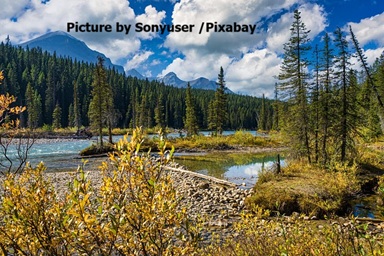
Nestled in the heart of the Canadian Rockies, Jasper National Park in Alberta, Canada, spans over 11,000 square kilometers of rugged mountains, pristine lakes, and sprawling forests. Established in 1907, this UNESCO World Heritage Site is renowned for its breathtaking landscapes and rich biodiversity. The park’s diverse ecosystems, ranging from alpine meadows to dense coniferous forests, provide habitat for an array of wild animals. This article delves into the fascinating wildlife of Jasper National Park, highlighting the iconic species that roam its wilderness.
Mammals Of Jasper National Park
Jasper’s mammal population is one of its most celebrated features, with large predators and ungulates drawing wildlife enthusiasts from around the globe. The Grizzly Bear (Ursus arctos horribilis) is a flagship species of the park. These powerful omnivores, with their distinctive humped shoulders, roam the forests and meadows, foraging for berries, roots, and small mammals. Grizzly Bears are most active in spring and fall, and sightings are common along trails like the Maligne Lake Road.
Equally iconic is the Black Bear (Ursus americanus), often spotted in forested areas or near berry patches. Smaller than their grizzly cousins, Black Bears are agile climbers and opportunistic feeders, consuming everything from insects to carrion. Visitors are advised to maintain a safe distance, as both bear species can be unpredictable if approached.
The park is also home to the elusive Gray Wolf (Canis lupus), a top predator that plays a vital role in maintaining ecological balance. Wolves hunt in packs, preying on Elk (Cervus canadensis) and Moose (Alces alces), which are abundant in Jasper. Elk are frequently seen grazing in open meadows, particularly around the Athabasca River, while Moose, with their distinctive antlers and long legs, prefer the park’s wetlands and lakeshores.
Mountain Goats (Oreamnos americanus) are a symbol of Jasper’s alpine zones. These sure-footed climbers, with their thick white coats, are often spotted scaling steep cliffs in areas like Mount Edith Cavell. Similarly, Bighorn Sheep (Ovis canadensis) thrive in rocky terrains, their curved horns a striking feature. Both species are well-adapted to the park’s rugged landscapes, grazing on alpine grasses and shrubs.
Smaller mammals also flourish in Jasper. The Hoary Marmot (Marmota caligata), a large rodent, is commonly seen sunning itself on rocky outcrops in alpine meadows. American Red Squirrels (Tamiasciurus hudsonicus) chatter noisily in the forests, gathering pinecones for winter. The American Pika (Ochotona princeps), a small, rabbit-like mammal, darts among talus slopes, collecting vegetation to store in hay piles for the cold months.
Birds Of Jasper National Park
Jasper’s avian diversity is equally impressive, with over 200 species recorded. The Bald Eagle (Haliaeetus leucocephalus), with its striking white head and powerful wingspan, is a frequent sight along rivers and lakes, where it hunts for fish. The park’s waterways also attract the Common Loon (Gavia immer), known for its haunting call and red eyes, often seen diving in Maligne Lake.
In the forests, the Clark’s Nutcracker (Nucifraga columbiana) plays a crucial ecological role by caching pine seeds, aiding in forest regeneration. The Canada Jay (Perisoreus canadensis), nicknamed the “camp robber,” is a bold bird that often approaches hikers in search of food scraps. Higher up, in the subalpine zones, the White-tailed Ptarmigan (Lagopus leucura) blends seamlessly with the snow, its plumage changing seasonally for camouflage.
Reptiles And Amphibians
While less abundant, Jasper’s reptiles and amphibians add to its ecological tapestry. The Western Toad (Anaxyrus boreas) is commonly found near wetlands, its warty skin and distinctive hopping making it recognizable. The Common Garter Snake (Thamnophis sirtalis), one of the few reptiles in the park, can be spotted in warmer, low-elevation areas, feeding on insects and small amphibians.
Conservation And Viewing Tips
Jasper National Park is committed to wildlife conservation, with efforts focused on protecting habitats and minimizing human-wildlife conflicts. Visitors are encouraged to follow park guidelines, such as keeping a safe distance from animals (at least 100 meters for bears and wolves, 30 meters for other large mammals) and using bear-proof food storage. Wildlife viewing is best during dawn or dusk, with popular spots including Maligne Lake, Athabasca Falls, and the Icefields Parkway.
Conclusion
Jasper National Park is a sanctuary for some of North America’s most iconic wildlife. From the majestic Grizzly Bear to the elusive American Pika, the park’s animals thrive in its diverse ecosystems, offering visitors a glimpse into the untamed beauty of the Canadian Rockies. By respecting these creatures and their habitats, we ensure that future generations can experience the wild heart of Jasper.