
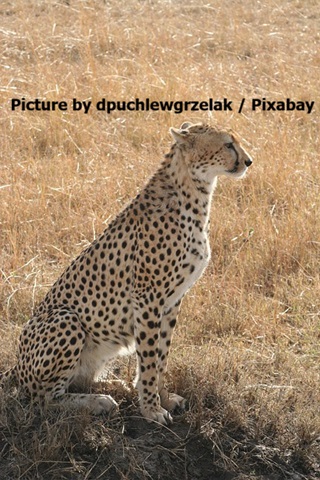
The Cheetah(Acinonyx jubatus) is a large felid renowned for its unparalleled speed and distinctive appearance. Native to Africa and a small population in Iran, this species embodies a unique blend of physical adaptations and ecological roles. Below are the main facts about the Cheetah, including details on the rare King Cheetah mutation.
| Class | Mammalia |
| Order | Carnivora |
| Family | Felidae |
| Genus | Acinonyx |
| Species | A. jubatus |
| Binomial Name | Acinonyx jubatus |
| Length | 1.1–1.4 meters(3’7″–4’7″) |
| Tail Length | 60–90 cm (2–3 feet) |
| Shoulder Height | 60–90 cm (2–3 feet) |
| Weight | 35–65 kg (77–143 pounds) |
| IUCN Status | Vulnerable |
Physical Characteristics
Size And Weight: Adult Cheetahs measure 1.1–1.4 meters (3 feet 7 inches to 4 feet 7 inches) in body length, with a tail of 60–90 cm (2–3 feet). They stand 60–90 cm (2–3 feet) tall at the shoulder and weigh 35–65 kg (77–143 pounds), with males slightly larger than females.
Coat And Markings: Cheetahs have a tawny or yellowish coat covered with solid black spots. Their face features distinctive “tear marks” running from the inner corners of the eyes to the mouth, aiding in glare reduction and prey focus.
Body Structure: Built for speed, Cheetahs have a slender, lightweight frame, long legs, a deep chest, and a small, aerodynamic head. Their spine is highly flexible, allowing for extended strides.
Speed And Hunting
Fastest Land Animal: Cheetahs can sprint at speeds up to 97–113 km/h (60–70 mph) over short distances (up to 500 meters [1,640 feet]). They accelerate from 0 to 97 km/h (60 mph) in about 3 seconds.
Hunting Strategy: Primarily diurnal, Cheetahs hunt during early morning or late afternoon. They rely on stealth to approach prey within 30–90 meters (100–300 feet) before unleashing a high-speed chase. Their non-retractable claws and specialized paw pads provide grip during sprints.
Prey: Cheetahs target small to medium-sized hoofed mammals, such as gazelles, impalas, and springboks. In some regions, they may also hunt hares or young Common Ostriches(Struthio camelus).
Success Rate: Their hunts succeed about 50% of the time, but Cheetahs often lose kills to larger predators like Lions(Panthera leo) or hyenas.
Behavior And Social Structure
Social Organization: Cheetahs are mostly solitary, except for females with cubs and male coalitions (often brothers) that hunt and defend territories together. Males mark territories with urine, while females have larger, overlapping home ranges.
Vocalizations: Cheetahs communicate with a variety of sounds, including purrs, chirps, growls, and a distinctive “stutter-bark” used during social interactions. Unlike other big cats, they cannot roar due to a fixed hyoid bone.
Reproduction: Females reach sexual maturity at 20–24 months and have a gestation period of about 90–95 days, giving birth to 3–5 cubs on average. Cubs are born with a silvery mane called a “mantle,” which fades with age. Cub mortality is high, with up to 70% not surviving their first year due to predation or disease.
Habitat And Distribution
Habitat: Cheetahs prefer open savannas, grasslands, and semi-arid regions with enough cover for stalking prey. They avoid dense forests and deserts.
Geographic Range: Once widespread across Africa and Asia, Cheetahs are now primarily found in sub-Saharan Africa, with a critically endangered population of fewer than 50 Asiatic Cheetahs (Acinonyx jubatus venaticus) in Iran’s central plateau.
Subspecies: Four recognized subspecies exist: Southeast African Cheetah (A. j. jubatus), Northeast African Cheetah (A. j. soemmeringii), Northwest African Cheetah (A. j. hecki), and the Asiatic Cheetah(A. j. venaticus).
*Subspecies are populations that show subtle differences from other populations. Subspecies are usually reserved to certain geographic areas.*
Conservation Status
Population: The global Cheetah population is estimated at 6,500–7,000, with ongoing declines due to habitat loss, human-wildlife conflict, and poaching. More precise tracking occurs in regions with robust conservation programs, such as Namibia and Botswana. Namibia, supporting an estimated 2,500–3,000 Cheetahs, benefits from detailed monitoring by groups like the Cheetah Conservation Fund, using tools like camera traps, GPS collars, and community reports. Botswana, with approximately 1,500–2,000 Cheetahs, conducts regular surveys in areas like the Okavango Delta through local wildlife authorities. In contrast, data from less-monitored regions, such as parts of East Africa or the Sahel, often rely on broader estimates, leading to some variability in global population figures.
Threats: Cheetahs face challenges from fragmented habitats, competition with larger predators, and low genetic diversity, which increases disease susceptibility. Illegal pet trade also threatens cubs.
Conservation Efforts: Protected areas, anti-poaching measures, and breeding programs aim to stabilize populations. Organizations like the Cheetah Conservation Fund work to mitigate human-Cheetah conflict through livestock guarding dogs and community education.
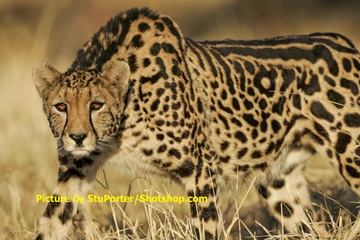
The King Cheetah Mutation
Description: The King Cheetah is not a separate species but a rare genetic mutation of the Cheetah, characterized by a unique coat pattern. Instead of solid spots, King Cheetahs have large, irregular blotches, merged spots, and three dark stripes running along the spine from neck to tail.
Genetic Basis: The mutation is caused by a recessive gene, meaning both parents must carry the gene for offspring to display the King Cheetah pattern. This trait is linked to a single nucleotide change in the Taqpep gene, which affects pigment distribution.
Discovery And Distribution: First documented in 1926 in Zimbabwe, King Cheetahs were initially thought to be a distinct species. They are primarily found in southern Africa, particularly in South Africa and Botswana, with sightings in Zimbabwe and Namibia. The mutation is extremely rare in wild populations.
Conservation And Captivity: King Cheetahs are bred in some conservation facilities, such as South Africa’s Cango Wildlife Ranch, to study and preserve the mutation. In the wild, their unique pattern may affect camouflage, potentially impacting hunting success.
Cultural Significance: The King Cheetah’s striking appearance has made it a symbol of rarity and beauty in wildlife conservation, often featured in media and ecotourism.
Ecological Role
Cheetahs help regulate prey populations, maintaining ecosystem balance. Their preference for weaker or younger animals can indirectly benefit healthier herds. However, their vulnerability to larger predators underscores their delicate position in the food web.
Interesting Facts
- Cheetahs pant heavily after sprints, requiring 15–30 minutes to recover due to extreme energy expenditure.
- Their tail acts as a rudder during high-speed chases, aiding in sharp turns.
- Cheetahs have larger adrenal glands than other cats, supporting their explosive energy needs.
- Unlike other big cats, Cheetahs are relatively docile and have been historically tamed for hunting in ancient civilizations, such as in Persia and India.
The Cheetah, with its extraordinary speed and elegant form, remains an iconic species facing significant conservation challenges. The King Cheetah mutation adds a layer of intrigue, highlighting the genetic diversity within this remarkable felid. Efforts to protect Cheetahs and their habitats are critical to ensuring their survival in the wild.