
Introduction
The Kellogg Company, commonly known as Kellogg’s, is a name synonymous with breakfast cereal, shaping morning routines across the globe for over a century. Founded in 1906 by Will Keith Kellogg in Battle Creek, Michigan, the company has grown from a small operation producing corn flakes into a multinational food manufacturing giant. Today, operating as Kellanova for its snack and international cereal divisions and WK Kellogg Co for its North American cereal business, the company boasts a diverse portfolio that includes iconic brands like Corn Flakes, Rice Krispies, Pringles, and Eggo. This article delves into Kellogg’s history, innovations, business strategies, challenges, and its impact on the food industry.
Historical Foundations
The story of Kellogg’s begins in the late 19th century at the Battle Creek Sanitarium, a health facility run by Dr. John Harvey Kellogg, a physician and advocate of vegetarianism influenced by the Seventh-day Adventist Church. John, along with his younger brother Will Keith Kellogg, sought to improve the diet of the sanitarium’s patients by developing nutritious, plant-based foods. In 1894, a serendipitous discovery occurred when a batch of boiled wheat, left overnight, was passed through rollers, producing delicate flakes that, when baked, became crispy and flavorful. This accidental invention laid the groundwork for what would become Kellogg’s Corn Flakes.
Will Keith Kellogg, a savvy businessman, recognized the commercial potential of these flakes. Initially, the flaked wheat was packaged and mailed to former sanitarium guests, but demand grew rapidly. Tensions arose between the brothers, as John, focused on health, opposed broader distribution, while Will envisioned a mass-market product. In 1906, Will founded the Battle Creek Toasted Corn Flake Company, buying out his brother’s interest. By 1909, the company was producing 120,000 cases of Corn Flakes daily, and in 1922, it officially became the Kellogg Company.
Innovation And Product Expansion
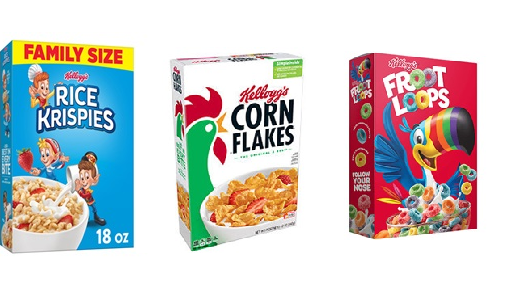
Kellogg’s early success was driven by innovation in both product development and marketing. The company introduced Rice Krispies in 1928, followed by Special K in 1955, Froot Loops, and Frosted Flakes, catering to diverse consumer tastes. In the 1930s, Kellogg’s pioneered voluntary nutrition labeling by including product information and recipes on packaging, a move that set industry standards. During World War II, the company supported the war effort by producing over 43 million packages of combat rations, demonstrating its manufacturing prowess.
The company’s diversification began in earnest in 1969 with the acquisition of Salada Foods, adding tea and desserts to its portfolio. The 1970s saw the introduction of Frosted Mini-Wheats and the acquisition of Fearn International, expanding into soups and sauces. In 2000, Kellogg’s acquired Kashi, a natural cereal brand, and in 2001, it purchased Keebler Foods for $3.9 billion, gaining brands like Cheez-It. The 2012 acquisition of Pringles from Procter & Gamble for $2.7 billion made Kellogg’s the world’s second-largest snack food company after PepsiCo.
Today, Kellanova’s portfolio includes cereals (Corn Flakes, Frosties), snacks (Pringles, Cheez-It), frozen foods (Eggo waffles), and plant-based products (Morningstar Farms). WK Kellogg Co focuses on North American cereals, with brands like Froot Loops and Raisin Bran. Products are manufactured in 18 countries and marketed in over 180, reflecting Kellogg’s global reach.
Business Strategies And Market Leadership
Kellogg’s has maintained its position as a global leader in the breakfast cereal market through strategic acquisitions, innovative advertising, and a focus on consumer trends. The company’s iconic “K” logo, inspired by W.K. Kellogg’s signature, has been a mark of quality since 1906. Campaigns like “Gotta Have My Pops” and partnerships with entities like NASCAR and the Olympics have bolstered brand visibility.
In 2023, Kellogg’s executed a significant restructuring, splitting into two publicly traded entities: WK Kellogg Co, focusing on North American cereals, and Kellanova, overseeing snacks, international cereals, and plant-based foods. This move aimed to separate the slower-growing cereal market from faster-growing snack and international segments, allowing each entity to pursue distinct strategies. Kellanova, with 2021 net sales of nearly $14.2 billion, is positioned as a global snacking powerhouse, while WK Kellogg Co targets regional cereal dominance.
The company has also embraced sustainability, committing to science-based targets to reduce emissions by 15% (scopes 1 and 2) by 2020 and 65% by 2050 from a 2015 baseline, alongside a 50% reduction in scope 3 emissions by 2050. Programs supporting 500,000 farmers to adopt climate-smart practices underscore Kellogg’s environmental focus.
Challenges And Controversies
Despite its success, Kellogg’s has faced challenges. In 2010, the company recalled 28 million boxes of cereals like Apple Jacks and Froot Loops due to a chemical, 2-methylnaphthalene, in packaging liners, which caused nausea and vomiting in some consumers. While no serious health issues were reported, the incident highlighted gaps in chemical safety data, as neither the FDA nor EPA had comprehensive information on 2-methylnaphthalene.
In 2024, CEO Gary Pilnick sparked controversy by suggesting cereal as an affordable dinner option amid economic pressures. Critics, including consumers and PR experts, called the remarks tone-deaf, noting that cereal, with boxes costing over $7, was not a nutritious substitute for a full meal. The backlash underscored the need for empathetic corporate communication, especially from a leader earning over $4 million annually.
Health concerns have also dogged Kellogg’s, particularly regarding the sugar content of its cereals. A 2025 post on X accused the company of funding science to market sugary cereals as healthy, contributing to the obesity epidemic. While not independently verified, such sentiments reflect public skepticism about processed foods.
Financial Performance And Acquisitions
Kellogg’s financial trajectory has been mixed. In 2000, under CEO Carlos Gutierrez, the company underwent a “renewal process” to remain the world’s top cereal producer. This involved laying off 25% of its North American workforce, closing the historic Battle Creek plant, and acquiring Keebler. Despite earnings growth in 1999 and 2000, sales declined by 0.4%, and stock performance lagged. By 2001, General Mills overtook Kellogg’s as the U.S. cereal market leader.
In August 2024, Mars, Inc., known for M&M’s and Snickers, agreed to acquire Kellanova for $36 billion, a deal expected to close in 2025. This acquisition aims to bolster Mars’ snacking portfolio with Kellogg’s brands, though it may face regulatory scrutiny due to market concentration concerns.
Social Impact And Philanthropy
W.K. Kellogg’s legacy extends beyond cereal. In 1930, he established the W.K. Kellogg Foundation, dedicated to improving children’s lives through health, education, and agriculture programs. His early adoption of a 30-hour workweek during the Great Depression, intended to employ more workers, continued in some factories until 1980. These initiatives reflect Kellogg’s commitment to social good, a value the company promotes through its “Better Days” ESG strategy, aiming to support 3 billion people by 2030.
Global Presence And Cultural Adaptation
Kellogg’s global expansion began in the 1930s, with Corn Flakes reaching markets like Spain. In India, launched in 1994, Kellogg’s tailored products like Chocos to address local nutritional needs, such as iron deficiency in children. The company’s ability to adapt to regional tastes—offering Coco Pops in Europe or Rice Bubbles in Australia—has been key to its success in 180 countries.
Future Outlook
As Kellanova and WK Kellogg Co navigate their post-split futures, challenges loom. The cereal market faces headwinds from changing consumer preferences, with many opting for protein-rich or low-sugar breakfasts. Kellanova’s focus on snacks aligns with snacking trends, but competition from PepsiCo and Mondelez is fierce. The Mars acquisition could enhance Kellanova’s resources but risks diluting its brand identity. WK Kellogg Co, meanwhile, must innovate to retain relevance in a mature North American cereal market.
Sustainability remains a priority, with Kellanova and WK Kellogg Co investing in regenerative agriculture and packaging reductions. However, public scrutiny over health claims and labor practices will demand transparency and accountability. Leveraging its 118-year heritage while embracing innovation will be critical for Kellogg’s continued leadership.
Conclusion
The Kellogg Company’s journey from a sanitarium kitchen to a global food titan is a testament to innovation, resilience, and adaptability. From the accidental invention of Corn Flakes to the strategic split into Kellanova and WK Kellogg Co, the company has navigated economic upheavals and health controversies, while maintaining its place at breakfast tables worldwide. As it faces evolving consumer demands, Kellogg’s must balance its storied legacy with the agility to meet modern expectations. With a commitment to nutrition, sustainability, and social good, Kellogg’s remains poised to shape the future of food, one bowl at a time.