
Introduction
The Cougar, scientifically known as Puma concolor, stands as one of North America’s most remarkable and enigmatic large predators. Often shrouded in mystery due to its elusive and solitary behavior, the Cougar has fascinated wildlife enthusiasts, researchers, and conservationists alike. This majestic big cat, also referred to by many as the Mountain Lion, Puma, or Panther depending on the region, plays an indispensable role in maintaining the balance of ecosystems across a vast geographic range. From the dense, misty forests of the Pacific Northwest to the arid deserts of the Southwest, the Cougar’s ability to thrive in a wide variety of habitats is a testament to its adaptability and resilience.
In this comprehensive exploration, we will delve into the biology, behavior, ecology, and conservation of the Cougar. Understanding the Cougar is not only crucial for appreciating one of North America’s most iconic wildlife species but also for recognizing the broader implications for biodiversity conservation and ecosystem health.
Taxonomy And Physical Characteristics
| Genus | Puma |
| Species | P. concolor |
| Binomial Name | Puma concolor |
| Length | 1-2.8 m(3’3”-9’2”) |
| Shoulder Height | 60-90 cm(2′-2’11”) |
| Tail Length | 50-95 cm(1’8”-3’1”) |
| Weight | 34-120 kg(75-265 lbs.) |
| IUCN Status | Least Concern |
The Cougar belongs to the Felidae family and is the sole member of the genus Puma. It is one of the largest wild cats in North America, with adults weighing 55 kilograms(121 pounds) on average, though size varies widely based on geographic location, sex, and individual factors. Males are generally larger than females, with longer bodies and more powerful builds.
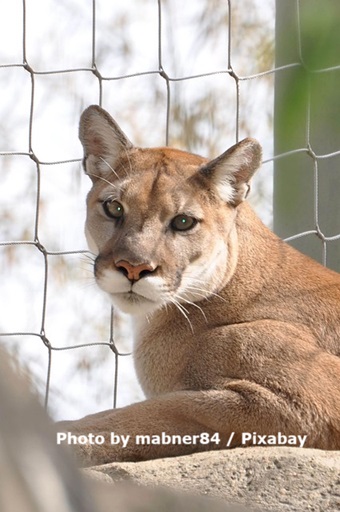
Physically, Cougars are characterized by a tawny or sandy coloration, which helps them blend seamlessly into various environments. Their coats tend to be uniform in color, though some individuals may exhibit slight variations with lighter underbellies and darker ear tips or facial markings. The long, muscular tail—often tipped with black fur—serves as a crucial balancing tool when the cat navigates steep or rugged terrain.
Cougars have powerful limbs and sharp retractable claws that aid in climbing, hunting, and defense. Their keen eyesight, especially adapted for low-light conditions, and acute hearing make them effective nocturnal hunters. Unlike their spotted close relatives the Leopard(Panthera pardus) or Jaguar(Panthera onca), adult Cougars lack rosettes or spots, though juveniles display faint spots that fade as they mature.
Distribution And Habitat
Cougars live in much of the Americas where they occupy a diverse array of habitats. They are found in:
- Dense coniferous and deciduous forests, where thick cover provides shelter and stalking opportunities.
- Mountainous regions with rugged terrain that offers den sites and vantage points.
- Desert and semi-arid landscapes where water sources and prey are available.
- Grasslands and shrublands, provided there is sufficient prey and cover.
This flexibility in habitat preference underscores the Cougar’s adaptability but also highlights the need for large contiguous areas of habitat to support viable populations.
Behavior And Ecology
Cougars are solitary animals with large home ranges that can vary dramatically depending on habitat quality, prey availability, and individual characteristics. A male’s territory may cover up to 1,000 square kilometers (386 square miles), overlapping with several smaller female territories. These cats mark their territories using scent markings and scratch marks on trees.
Activity Patterns
Primarily nocturnal and crepuscular, Cougars are most active during dawn, dusk, and nighttime hours. This behavior helps them avoid human contact and reduces competition with other large predators such as wolves and bears. However, in areas with minimal human disturbance, Cougars may be active during daylight hours.
Diet And Hunting
As apex predators, cougars play a critical role in regulating populations of herbivorous mammals, particularly deer species such as Mule Deer(Odocoileus hemionus), White-Tailed Deer(Odocoileus virginanus), and Elk(Cervus canadensis). Their diet is opportunistic and can include smaller mammals like rabbits, raccoons, porcupines, and occasionally livestock or domestic animals when natural prey is scarce.
Cougars employ stalking and ambush tactics in hunting. They rely on stealth and patience, using their keen senses to approach prey silently before making a swift and powerful attack. Their muscular build allows them to leap great distances and deliver a fatal bite, typically targeting the neck or base of the skull to incapacitate prey quickly.
Reproduction And Lifespan
Cougars reach sexual maturity around 2 to 3 years of age. Mating can occur year-round but often peaks during winter months. After a gestation period of approximately 3 months, females give birth to litters of 1 to 6 kittens. Cubs are born blind and helpless, relying entirely on their mother for protection and nourishment.
Young Cougars stay with their mother for up to two years, learning essential survival skills before dispersing to establish their own territories. A Cougar can live for up to 20 years.
Role In Ecosystems
As apex predators, Cougars help maintain the health and diversity of ecosystems by controlling prey populations and influencing the behavior of other species. By limiting herbivore numbers, particularly deer, they help prevent overgrazing and promote the regeneration of vegetation, which in turn supports a wide array of other wildlife.
Their presence can also create a “landscape of fear” for prey species, altering grazing patterns and habitat use, which benefits plant communities. This top-down regulation exemplifies the Cougar’s keystone species status in many North American ecosystems.
Human Interactions And Conservation Challenges
Despite their importance, Cougars often face negative perceptions fueled by myths, fear, and misinformation. Their secretive nature leads to misunderstandings and sometimes exaggerated concerns about human safety and livestock predation.
Human development poses significant threats to Cougars. Habitat fragmentation from urban expansion, roads, and agriculture reduces available territory and disrupts movement corridors essential for gene flow and dispersal. Vehicle collisions are a leading cause of mortality for Cougars living near developed areas.
Conflict with humans can also arise from livestock depredation, prompting retaliatory killings. Illegal hunting and poaching remain concerns in some regions. Additionally, environmental contaminants and diseases can impact Cougar health.
Conservation Efforts And Research
Conservation of the Cougar requires a multi-faceted approach involving habitat preservation, conflict mitigation, public education, and scientific research. Many states and provinces have implemented hunting regulations or moratoriums to protect populations. Wildlife corridors and protected areas help maintain connectivity between habitats.
Research utilizing GPS collars, camera traps, and genetic studies has expanded our understanding of Cougar ecology, behavior, and population dynamics. These technologies allow scientists to monitor movements, identify critical habitats, and assess human impacts.
Public outreach programs aim to foster coexistence by educating communities about Cougar behavior and safety measures, reducing fear and promoting tolerance.
How You Can Help
Supporting Cougar conservation can take many forms:
- Engage with local wildlife organizations that focus on large carnivore research and habitat protection.
- Advocate for policies that conserve natural habitats and establish wildlife corridors.
- Practice responsible outdoor recreation, respecting wildlife space and minimizing disturbance.
- Learn about Cougars and share accurate information to dispel myths and promote understanding.
- Support efforts to reduce vehicle collisions through measures like wildlife crossings and speed limits in critical areas.
Conclusion
The Cougar(Puma concolor), remains a symbol of wilderness and ecological balance across much of the Americas. Its elusive nature and adaptability allow it to persist despite numerous challenges, but its continued survival depends on our awareness, respect, and proactive stewardship.
By deepening our understanding of this magnificent predator and the vital role it plays in ecosystems, we can foster coexistence and ensure that future generations inherit landscapes where Cougars roam wild and free. The story of the Cougar is, in many ways, a story about the health of our natural world—and our place within it.
Stay curious, informed, and engaged. Our shared future with species like the Cougar relies on thoughtful action and a commitment to preserving the wild spaces that sustain us all.